Growing up as a Black disabled woman in New Orleans, Rickii Lea Ainey a Disability Rights Advocate in New Orleans, learned early on that visibility is not just a personal choice, but a political necessity. Raised in a Black-Catholic household where she was physically disabled from birth, Rickii was mentored by a grandmother who famously declared that “a closed mouth doesn’t get fed.” This foundational wisdom instilled in her a fierce confidence to vocalize her needs and claim her space in a world often designed to overlook her.
In fact, Rickii said, during her birth, the doctors diagnosed her with Arthrogryposis Multiplex Congenita and said she may have two days or two weeks or two months to live. Her grandmother immediately asked for a priest to come and bless her granddaughter, something that is common with New Orleans Catholic families when someone is in the process of transitioning or very ill, so after initial reluctance from the hospital caregivers they located a priest to bless her. Well, today, Rickii’s work and advocacy has been blessing many in her New Orleans community and across the state of Louisiana.
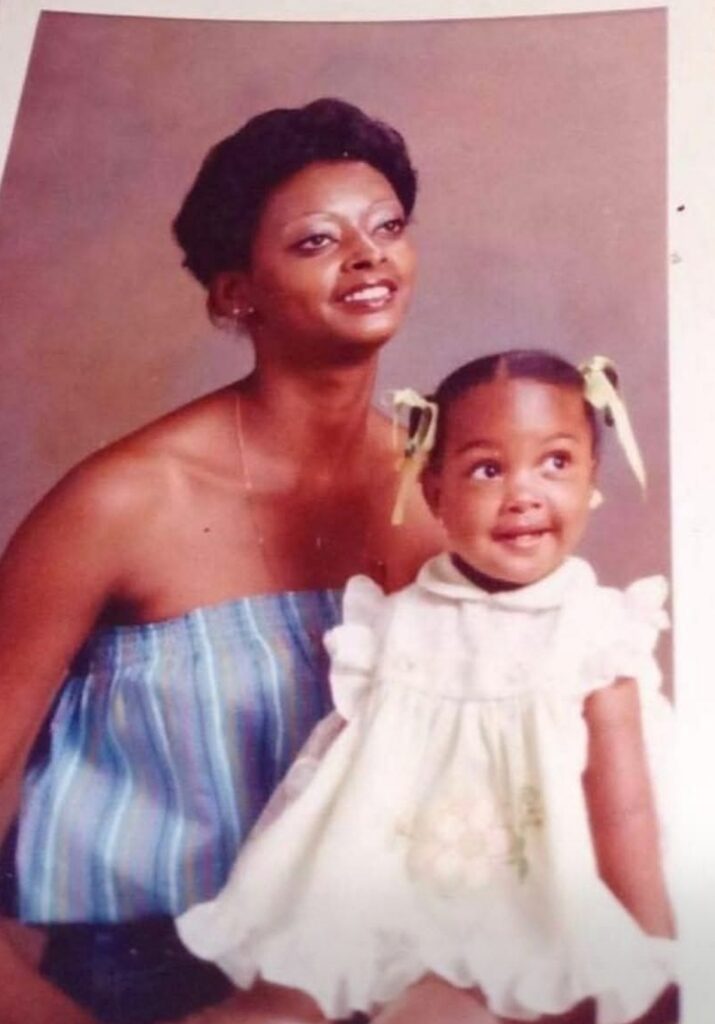
Young Rickii as a child with her mother Carol in year
Rickii’s journey into professional advocacy began in the retail sector as a teenager at Express, where she challenged workplace norms to ensure physical accessibility for both employees and customers. By negotiating for simple yet vital accommodations like clothing hooks and register access, she realized with her disability it made it harder to reach for clothes that were higher up that customers wanted to see, this was important since they got commission, so she advocated for hooks to grab items to showcase to her customers. She also even pushed for a position at the register and became one of the best and strongest workers at the register, getting compliments from upper management, showing that a Black disabled teenager had all the talent to succeed like her counterparts in an environment that was inclusive, one that she advocated for herself. Her talent for retail was only the beginning of a career dedicated to dismantling systemic barriers through persistence and clear communication.
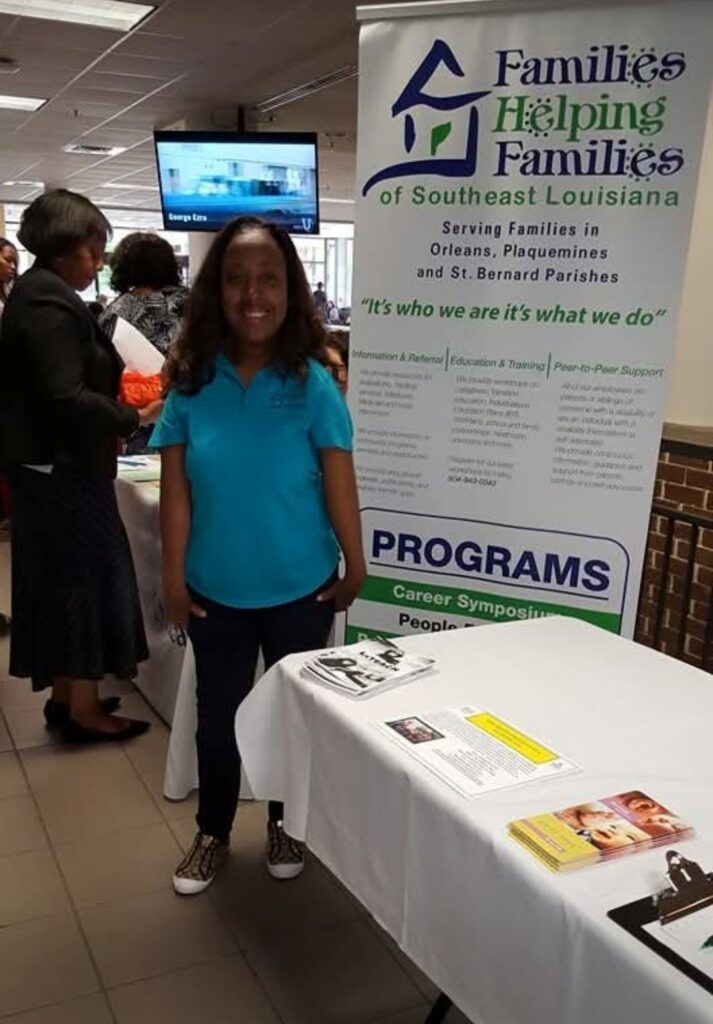
Rickii working with the organization Families Helping Families; helping families across southeast and coastal Louisiana access resources and tools for a more equitable life.
Formal training through organizations like “Partners in Policymaking” provided Rickii with the tools to take her advocacy to the legislative level. As the leader in the organization Louisiana Citizens for Action Now, she organized powerful rallies to advocate for disability rights with policymakers. In addition to this, her work with Families Helping Families further bridged the gap between policy and people, as she helped countless individuals navigate complex systems like securing housing especially in the aftermaths of natural disasters like hurricanes.
According to Rickii, the struggle for accessibility is far from over, as evidenced by Rickii’s experiences navigating the infrastructure in older cities like New Orleans. She highlights the stark contrast between more accessible cities like Washington, D.C. She also highlighted that as long as disabled people remain “unseen” there will be inequalities, even citing that for disabled folks their experiences can feel like not even second class citizens but third class citizens.
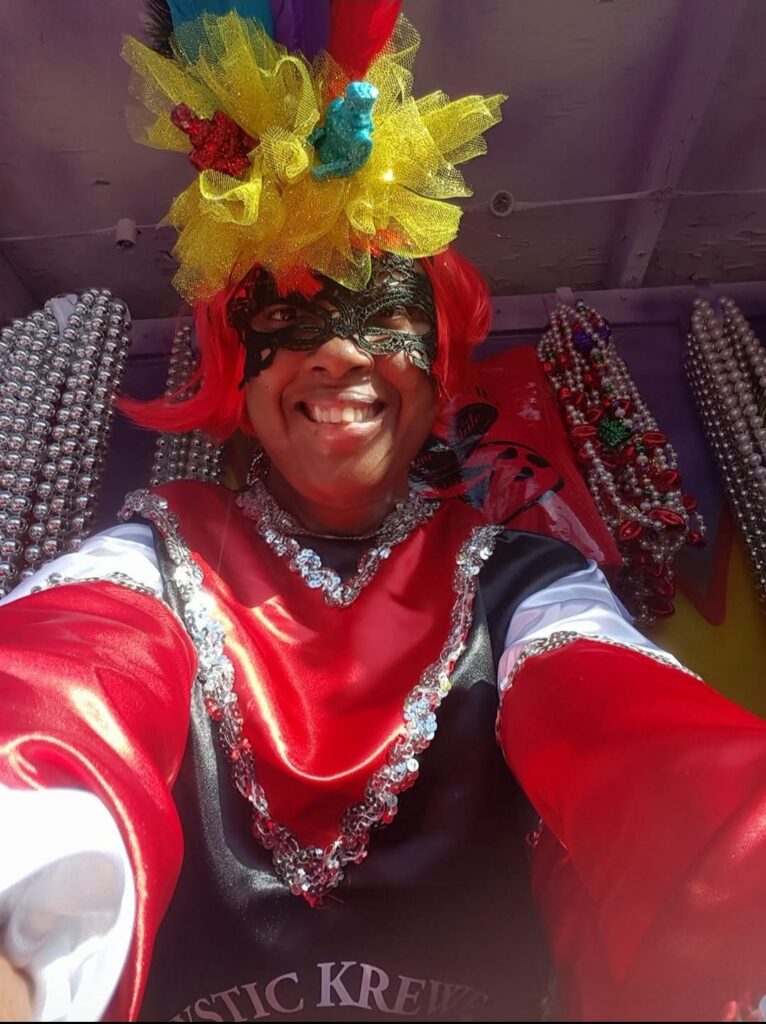
Rickii is a member of the Krewe of Femme Fatal a Black women Mardi Gras Krewe in New Orleans
Looking toward the future, Rickii is focused on empowering the next generation. She hopes to one day create an organization that serves as a training school dedicated to independent living skills. By teaching living skills like doing laundry, financial management, and other day to day necessities it could help persons with disabilities continue to grow their ability of independence, noting that family and friends may not always be around to help but having the ability to complete certain tasks when feasible could be a tremendous asset.
Rickii’s message to the youth and future leaders is clear: believe in yourself and state what you need, because advocacy for yourself is the first step in advocating for your entire community.
You can download the accompanying lesson plan here.
